Epoxy Flooring in Fort Worth, TX: What Homeowners Need to Know
If you're searching for epoxy flooring in Fort Worth, TX, you're already on the right track toward one of the most durable, low-maintenance upgrades you can make to your home or business. Epoxy flooring bonds directly to concrete, creating a hard, seamless surface that resists oil, chemicals, moisture, and the kind of heavy foot and vehicle traffic that ordinary paint or bare concrete simply can't handle.
Fort Worth presents some unique challenges for concrete floors. The expansive clay soil that runs beneath much of Tarrant County — sometimes called "black land prairie" clay — shifts seasonally as it cycles through wet winters and scorching summers. Those ground movements stress concrete slabs from below, and the region's intense UV exposure and triple-digit July heat stress coatings from above. Choosing the right epoxy system, applied correctly by an installer who understands local conditions, is what separates a floor that holds up for years from one that peels early. For a shorter overview focused on garage floors, see the Fort Worth garage floor epoxy guide.
Why Fort Worth Homeowners Choose Epoxy Over Bare Concrete
Bare concrete is porous. In neighborhoods like Westover Hills, Ridgmar, and TCU-Westcliff — where homes range from mid-century ranch houses to newer custom builds — garage slabs take a beating from lawnmowers, vehicles dripping Texas summer heat onto the floor, and seasonal humidity swings that can push moisture vapor right through the slab. Epoxy seals that porosity, making the surface easy to clean and far more resistant to staining and spalling.
Beyond protection, epoxy flooring dramatically improves the look of a space. A garage floor epoxy coating transforms a dull, gray slab into a polished, professional surface that makes your garage feel like a true extension of your home — whether you're using it as a workshop, a home gym, or just a cleaner place to park your truck.
For homeowners who want something truly eye-catching, metallic epoxy floors deliver a swirling, three-dimensional finish that looks custom-designed because it is. No two metallic epoxy floors look exactly alike, which makes them a popular choice in higher-end Fort Worth homes and commercial showrooms alike.
Understanding Your Epoxy Options
Standard Epoxy Coating
A multi-layer epoxy system — typically a primer coat, a base coat with optional color flakes, and a clear topcoat — is the workhorse of the industry. It's well-suited to residential garages, laundry rooms, and workshops. The color flake broadcast not only looks great but hides minor imperfections and adds grip to the surface.
Polyaspartic Floor Coating
For homeowners who need a faster turnaround or extra UV resistance, polyaspartic floor coating is worth serious consideration. Polyaspartic is a next-generation coating that cures significantly faster than traditional epoxy — often allowing same-day or next-day use — and it holds up exceptionally well against the intense sunlight that floods Fort Worth garages for eight or nine months out of the year. It is a common question for homeowners in newer areas like the Alliance corridor and far north Fort Worth, where many garage slabs have never been coated.
Concrete Floor Repair
No coating performs well over a compromised slab. If your concrete has cracks, pitting, or spalling — common in older Fort Worth homes where tree roots or soil movement have done their damage — those issues need to be addressed before any coating is applied. Professional concrete floor repair fills and stabilizes problem areas so the finished coating bonds evenly and lasts as long as it should.
Commercial Epoxy Flooring in Fort Worth
Epoxy isn't just for homeowners. Fort Worth's booming commercial sector — from Sundance Square retail spaces to the industrial corridors along I-30 and I-20 — demands flooring that can withstand forklift traffic, chemical spills, and round-the-clock foot traffic without showing wear. Properly specified commercial epoxy systems include thicker builds, anti-slip additives, and topcoats designed for heavy-duty environments.
Fort Worth Neighborhoods and Nearby Areas
Fort Worth Garage Epoxy Floors is an information and referral website for the Fort Worth metro and surrounding Tarrant County communities; no contractors are currently arranged through it. Whether you're in a newer development in Fossil Creek, an established neighborhood near the Cultural District, or a suburb like Mansfield to the southeast, no two slabs are the same. Ask any installer you consider to assess your floor individually before recommending a coating system.
What to Expect From the Installation Process
- Concrete assessment: A qualified installer should inspect the slab for moisture, cracks, previous coatings, and surface profile before recommending a system.
- Surface preparation: Diamond grinding opens the concrete's pores and ensures a mechanical bond — this step is non-negotiable for a long-lasting result.
- Repairs: Cracks and divots are filled and allowed to cure before coating begins.
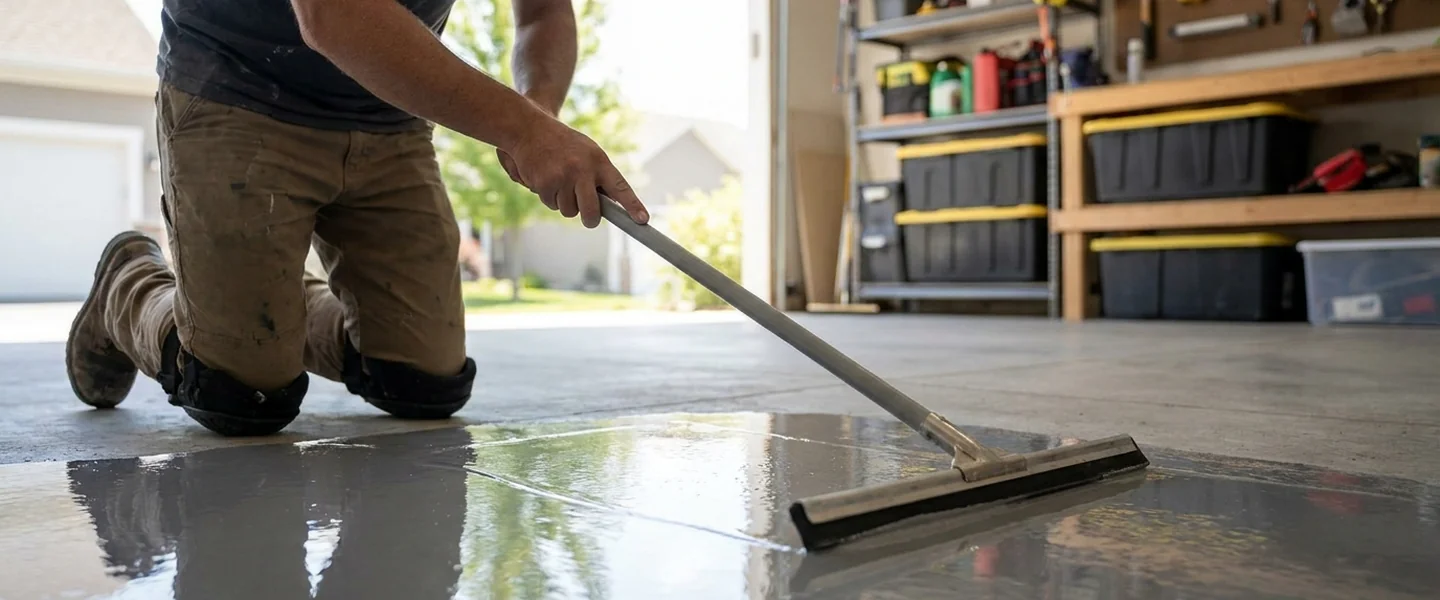
- Coating application: Primer, base coat, decorative elements (flakes or metallic pigments), and a durable topcoat are applied in sequence.
- Cure time: Depending on the system chosen, light foot traffic is typically possible within 24 hours; full vehicle traffic within a few days.
Moisture Testing: The Step Most Often Skipped
Moisture moving up through a slab is one of the most common reasons epoxy flooring delaminates, and it is easy to miss on a floor that looks dry. In Fort Worth, clay soil that holds water after heavy spring and fall rains can keep moisture under a slab for weeks. Ask any installer which test will be used before coating:
- Calcium chloride test (ASTM F1869): measures moisture vapor emission at the surface over about three days.
- In-slab relative humidity test (ASTM F2170): uses probes set into drilled holes and is often preferred by coating manufacturers.
- Plastic sheet test: taping down plastic overnight is a rough indicator only, not a substitute for a measured test.
Ask what reading the base coat allows, and what the plan is if the slab exceeds it. A moisture-mitigating primer adds cost, but it is far cheaper than removing a failed floor.
Epoxy, Polyaspartic and Polyurea: How the Layers Differ
Most residential epoxy flooring in Fort Worth is a system, not a single coating. Epoxy is usually the base: it builds thickness and bonds to the ground concrete. Polyaspartic or polyurea is usually the topcoat: it adds UV stability, abrasion resistance and faster cure. A system that is all epoxy can yellow or chalk where sunlight reaches it, while a system that is all fast-cure topcoat may be thinner overall. Ask the installer to name each layer, its product, and its thickness on the written quote.
What Affects Epoxy Flooring Cost in Fort Worth
This site does not publish prices. These are the questions that usually explain why two quotes for the same garage differ:
- How many square feet, including steps, aprons and any area under storage?
- Does an existing coating, paint or sealer need to be ground off?
- How much crack, joint and spall repair is included, and is it priced separately?
- Is a moisture test included, and is a moisture-mitigating primer likely?
- Full flake broadcast or partial? Solid color or metallic?
- Which topcoat, how many coats, and how thick?
- Are vertical stem walls or cove bases included?
Questions to Ask a Fort Worth Epoxy Flooring Installer
- Will the floor be diamond ground? Is any acid etching used?
- What happens if cracks reopen after the coating cures?
- When can I walk on it, park on it and expose it to chemicals?
- Who issues the warranty, what does it cover, what is excluded, and does it transfer?
- Is the installer licensed where required, and can you show proof of liability and workers' compensation insurance?
- Will the same crew that quotes the job do the work, or is it subcontracted?
Caring for an Epoxy Floor in North Texas
Sweep or dust-mop grit regularly, since sand tracked in from Fort Worth yards and job sites is what dulls a topcoat fastest. Wipe up oil, brake fluid and pool chemicals promptly. Mop with a pH-neutral cleaner and avoid harsh citrus or bleach cleaners unless the coating manufacturer allows them. Put pads under jack stands and motorcycle kickstands. Ask the installer for written care instructions for the specific products used.
Frequently Asked Questions
How long does epoxy flooring last in Fort Worth's climate?
Lifespan varies widely with prep, system thickness, topcoat choice, traffic and slab moisture, so ask the installer and the coating manufacturer what their written terms and data say for your use. The key factors are proper surface preparation, selecting a coating that handles UV exposure (polyaspartic topcoats help significantly), and addressing any slab moisture issues before installation. Cutting corners on prep is the number one reason epoxy floors fail prematurely in North Texas.
Can epoxy flooring be applied in hot Fort Worth summers?
Yes, but temperature and humidity management during application matter. Most epoxy products have acceptable application windows for summer conditions, and experienced installers schedule work during cooler parts of the day or choose formulations suited to higher temperatures. Polyaspartic coatings are particularly well-suited to warm-weather installs because they are less sensitive to temperature fluctuations than traditional epoxy.
Do I need to repair cracks before getting epoxy flooring installed?
Absolutely. Applying epoxy over unrepaired cracks or spalling is one of the most common mistakes in DIY installations and with less experienced contractors. Cracks can reflect through the coating over time and compromise adhesion. A proper concrete repair step — filling, grinding flush, and allowing the repair to cure — is essential before any coating system is applied, and it should be included in a quality professional installation.
Planning epoxy flooring for a garage, basement, or commercial space in Fort Worth? Start with the garage floor epoxy coating guide for prep, layer and cure details. Fort Worth Garage Epoxy Floors is an information and referral website: no contractors are currently arranged, and an inquiry does not book an assessment, estimate or appointment. To send an interest inquiry, call (817) 646-8612.