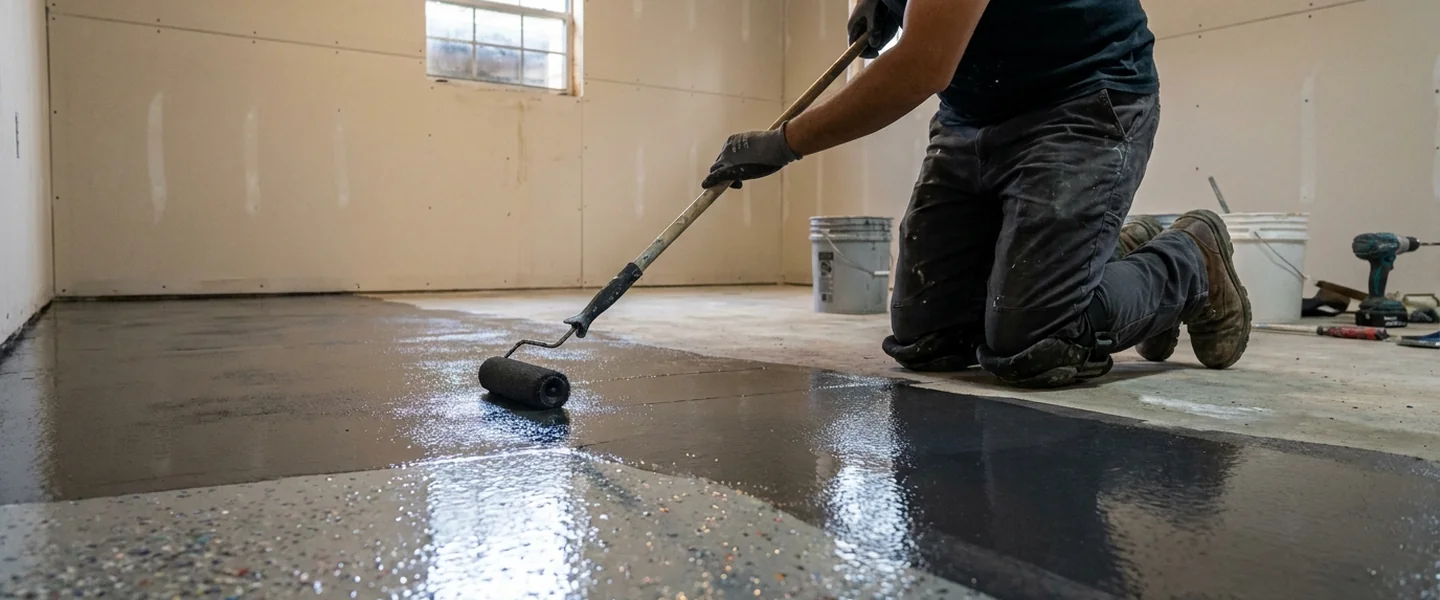
Basement Floor Epoxy Fort Worth, TX
Moisture-tolerant basement coating with vapor-block primer — designed for Tarrant County's clay-subgrade slabs and seasonal moisture cycles.
Call (817) 646-8612Basement floor epoxy in Fort Worth is a different challenge than garage floor epoxy. Below-grade concrete sits in direct contact with Fort Worth's water-retentive black-gumbo clay — a subgrade that holds moisture year-round and transmits it upward through the slab as moisture vapor. Apply a standard epoxy system without addressing vapor transmission on a Fort Worth basement floor, and the coating blisters and delaminate within one wet season.
We test every basement slab with a calcium chloride MVER test before specifying a system. Slabs with elevated MVER (which describes most Fort Worth basement slabs) receive a penetrating vapor-block primer before the base coat — a step that permanently prevents moisture-drive delamination. Call (817) 646-8612 for a free inspection and written estimate.
What Basement Floor Epoxy Means in North Texas
Fort Worth's basement slab environment is shaped by two factors unique to the region. First, the Blackland Prairie clay holds water like a sponge — spring rains saturate the subgrade and the moisture pressure takes months to dissipate. This makes MVER readings on Fort Worth basement slabs consistently higher than in sandy-soil markets. Second, Fort Worth's seasonal drought-and-flood cycle means the subgrade moisture level fluctuates significantly from spring to fall — a slab that tests dry in August may show elevated moisture in April. We factor seasonal timing into our moisture test recommendations.
For finished basement spaces being converted to living areas, storage rooms, home gyms, or workshops, a properly applied moisture-tolerant epoxy system provides a durable, cleanable surface that withstands the subgrade conditions long-term. For unfinished utility basements, epoxy seals the concrete surface against dust generation and makes the floor easy to maintain.
Project Details
| Timeline | 2 days (moisture test + prep Day 1; coating Day 2) |
|---|---|
| Moisture Testing | ASTM F1869 calcium chloride MVER or ASTM F2170 RH probe on every basement job |
| Vapor Primer | Applied on all slabs exceeding coating manufacturer MVER threshold (typically >3 lb/1000 sq ft/24hr) |
| Coating System | Vapor-block primer + 100% solids epoxy base + broadcast flake + polyaspartic topcoat |
| Anti-Slip Option | Anti-slip aggregate broadcast available for basement stair landings and utility areas |
| Warranty | 10 years — delamination, bubbling, peeling under normal use |
| Pricing | Quoted per job after free on-site inspection — every quote is itemized in writing |
Our Process for Fort Worth Basement Floors
We visit, measure the slab, and perform a calcium chloride MVER test. If MVER exceeds the threshold for the specified coating system, we include vapor-block primer in the written estimate.
Commercial grinder, CSP 2–3 profile. Cracks and spalls filled with polyurea filler. Efflorescence removed mechanically.
Penetrating moisture-mitigating primer applied and allowed to cure per manufacturer spec. This step is mandatory on Fort Worth basement slabs with measurable MVER.
100% solids epoxy base coat applied over cured primer. Vinyl flake broadcast to rejection while base is wet.
Aliphatic polyaspartic topcoat seals the flake and provides a durable, cleanable surface. Anti-slip aggregate broadcast in specified areas if requested.
Coverage inspection, care instructions, and warranty certificate.
Materials We Use
| Vapor-Block Primer | Mapei Planiseal EMB penetrating moisture-mitigating primer (rated to 15 lb/1000 sq ft/24hr MVER) |
|---|---|
| Base Coat | Sherwin-Williams ArmorSeal 1000 HS (100% solids epoxy, 10–12 mils DFT) |
| Flake | Stonhard vinyl acetate decorative broadcast flake |
| Topcoat | Aliphatic polyaspartic — UV-stable for walk-out basements with window exposure |
What We Typically Find in Fort Worth Basement Slabs
- Efflorescence deposits. White mineral deposits on the slab surface are a reliable indicator of past moisture migration through the concrete. We remove efflorescence mechanically and note it in the estimate as a moisture-risk flag.
- Previous paint or sealer failures. Many Fort Worth homeowners have attempted basement floor paint — typically a roller-applied latex or epoxy-paint product — that has subsequently peeled. We grind all previous coatings off completely before applying a new system.
- Sump pit surrounds. Homes in lower-elevation areas of Fort Worth near floodplains may have sump pits. We seal the slab area around sump pits with extra vapor primer and note ongoing moisture management in the care instructions.
- Settlement cracks. Fort Worth basement floors often show hairline cracks from seasonal clay movement. We fill these with flexible polyurea. Cracks with vertical displacement (step cracks) are noted as potential foundation indicators.
Warranty in Detail
10-year warranty covering delamination, bubbling, and peeling under normal residential use. The moisture vapor primer is a warranted component — if the coating fails due to moisture vapor on a slab where we applied and documented vapor-block primer, the failure is covered. Exclusions: active water intrusion through walls or floor cracks (not moisture vapor — standing water); damage from flooding events; improper cleaners; impact damage; and thermal shock.
Frequently Asked Questions
How do I know if my Fort Worth basement floor has a moisture problem?
Efflorescence (white powdery deposits), previous paint that has blistered or peeled, or a floor that feels damp or slightly cool to the touch in spring are all indicators. The definitive test is a calcium chloride MVER test, which we perform during the free inspection visit.
Can you coat a basement floor that had previous epoxy or paint?
Yes, but the previous coating must be ground off completely first. We never apply a new system over a failed existing coating. The grinder removes all previous layers down to bare concrete.
How much does basement floor epoxy cost in Fort Worth?
Call (817) 646-8612 for a free written estimate. Basement jobs are quoted per square foot based on slab condition, MVER test results, and the coating system specified.
Does basement floor epoxy prevent water intrusion?
No — epoxy is a surface coating, not a waterproofing system. If you have active water intrusion through foundation cracks or rising water table, that needs to be addressed by a waterproofing contractor before we coat. Epoxy handles normal moisture vapor transmission through the slab — it does not stop bulk water entry.
Do you do basement floor epoxy in finished living spaces?
Yes, but we need clear access to the entire floor area. Furniture, shelving, and stored items must be moved out. We work around interior walls and columns — no need to move drywall or framing.
How We Quote Basement Floor Projects
We do not quote basement floor epoxy over the phone. Basement slabs in Fort Worth have more site-specific variables than garage slabs: moisture level varies by drainage proximity, crack patterns vary by foundation type, and many basement slabs have existing paint or sealer that needs to be stripped before coating. We visit the space, perform an MVER test, assess all existing conditions, and deliver a written line-item estimate within 24 hours. The estimate separates grinding, crack fill, moisture primer, base coat, and topcoat as individual line items — you know what each component costs before committing.
After the Basement Floor Installation
First 24 hours: No foot traffic. The space should remain ventilated but with no occupancy — epoxy and polyaspartic off-gas mildly during cure, and basements have less natural air exchange than garages.
24–72 hours: Light foot traffic fine. Return stored items to the space gradually — dragging heavy items across the floor before full cure can mark the topcoat surface.
7 days: Full chemical cure. The floor is at full performance across all dimensions — mechanical, chemical, and abrasion resistance.
Seasonal awareness: In spring, when Fort Worth's subgrade moisture rises, check the floor for any early-stage blistering. A properly vapor-primed installation will show none. If you see any small domes forming under the coating surface, call us within the warranty period for assessment — early-detected moisture failures are smaller repairs than late-detected ones.
Annual care: Sweep or vacuum the basement floor regularly. Mop with pH-neutral cleaner. No waxing or resealing required. Inspect the floor edges and any sump pit surround annually for signs of moisture intrusion beyond normal vapor transmission.
Related Services
Schedule a Free Basement Floor Inspection
We test for moisture, assess slab condition, and provide a written estimate — no obligation.
Call (817) 646-8612What You Get in Our Quote vs. the Lowball Bid
We don't compete on the lowest sticker price — we compete on the quote that gets the job actually done. Here is what is included in every quote we write, and the cut-corners that show up in cheaper bids.
Included in our written quote
- Concrete moisture + porosity testing
- Crack and pitting repair before coating
- Full diamond-grind surface prep
- Written quote with flake/coat specs
- Cure-time schedule you can plan around
- 5-year warranty against delamination
Cut corners in the lowball bid
- Coating over uncured or wet slab
- Roller-only prep (no diamond grind)
- Lowball quotes without crack repair
- Subbed-out installation
- No moisture testing before coat
- Warranties full of fine print